
Assessment & Self-Discovery
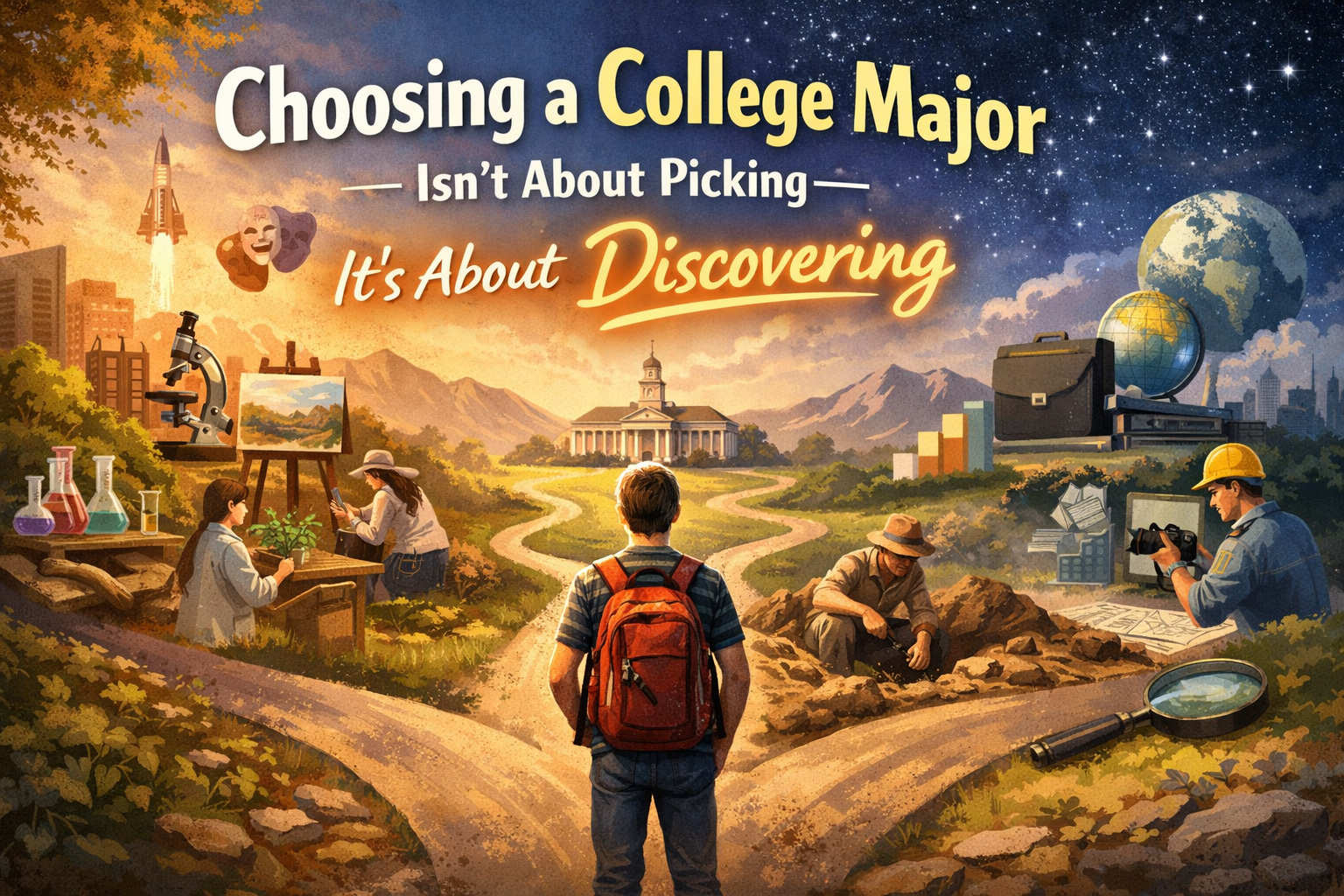
Choosing a College Major Isn’t About Picking—It’s About Discovering
By Tome Fierre
Choosing a college major is often presented as one of the most important decisions a young person will make.
But there’s a fundamental problem with how this decision is framed.
We tell students to “pick a major.”
That one word—pick—implies something casual, something quick, something final.
Like choosing a meal off a menu.
But choosing a major isn’t like picking dinner.
👉 It’s closer to choosing a direction for the next 40 years of your life.
And yet, millions of students are asked to make this decision with:
- Limited self-awareness
- External pressure from family and peers
- Misleading societal narratives about success
- Little understanding of what careers actually involve
The result?
👉 Many students choose the wrong major—not because they lack intelligence or ambition, but because they approached the decision the wrong way.
🔍 The Problem: “Picking” vs. “Discovering”
When students “pick” a major, they often rely on:
- What sounds impressive
- What others are doing
- What seems financially secure
- What their parents suggest
- What they think they should do
But none of those factors answer the most important question:
👉 What kind of life do you actually want to live?
Discovery is different.
Discovery is:
- Intentional
- Reflective
- Personal
- Iterative
👉 It’s not about choosing quickly—it’s about understanding deeply.
🧠 Why Most Students Choose the Wrong Major
Let’s be honest.
Most students don’t choose their major based on clarity.
They choose based on pressure, perception, and fear.
👨👩👧 Family Expectations
Parents want the best for their children.
That’s not the issue.
The issue is that “the best” is often defined through a narrow lens:
- stability
- prestige
- income
- familiarity
You hear things like:
- “You should be a doctor—it’s a great career.”
- “Lawyers always have opportunities.”
- “Business is safe—you can do anything with it.”
While these may be well-intentioned, they often overlook something critical:
👉 The student is the one who has to live that life—not the parent.
A career that looks great on paper but feels misaligned internally can lead to:
- burnout
- disengagement
- regret
👥 Peer Influence
Students are heavily influenced by what their peers are doing.
If your friends are going into:
- finance
- computer science
- nursing
…it becomes easy to follow the same path—not because it’s right for you, but because it feels safe.
👉 There’s comfort in moving with the crowd.
But there’s also danger.
Because the crowd doesn’t know you.
🏛️ Societal Norms and Prestige
Certain careers are placed on a pedestal:
- doctor
- lawyer
- engineer
- investment banker
These roles are often associated with:
- success
- intelligence
- respect
But here’s the truth most people don’t say out loud:
👉 Prestige does not equal fulfillment.
A prestigious career that doesn’t align with your natural interests and motivations can feel like a prison—just one with a nice title.
Stop Guessing Your Future—Discover It. Take the MAPP Assessment Now.
💰 The Money Myth
One of the most common drivers behind major selection is income.
Students are told:
👉 “Choose something that pays well.”
But this advice is incomplete.
Yes, income matters.
But so does:
- enjoyment
- engagement
- sustainability
Because here’s the reality:
👉 If you don’t enjoy what you do, it becomes harder to excel at it.
And if you don’t excel, your earning potential—and satisfaction—often plateau.
⏳ The 40-Year Reality Check
Let’s zoom out.
Imagine waking up every day for the next 40 years…
Going to a job that:
- doesn’t excite you
- doesn’t energize you
- doesn’t feel aligned with who you are
Now ask yourself:
👉 Is that a life you want to live?
Because that’s the real decision behind choosing a major.
Not:
- “What should I study?”
But:
👉 “What kind of daily experience do I want my life to be?”
🧠 Discovery Starts with Self-Awareness
You cannot make a good decision about your future without understanding yourself.
And yet, most students are never taught how to do this.
Discovery begins with questions like:
- What genuinely interests me?
- What activities make me lose track of time?
- What environments do I thrive in?
- What motivates me—internally, not externally?
- What kind of problems do I enjoy solving?
This is where tools like structured assessments can be powerful.
They help translate:
👉 interests + motivations + behaviors → real-world career alignment
But even beyond tools, the mindset shift is critical:
👉 Stop asking “What should I do?”
👉 Start asking “What fits who I am?”
🔄 Choosing a Major Is Not a One-Time Decision
Another major misconception:
👉 “Once you choose, you’re locked in.”
That’s simply not true.
Choosing a major is a living decision.
It evolves as you:
- gain experience
- learn more about yourself
- explore different paths
Many successful people:
- changed majors
- pivoted careers
- discovered their true path later
The key is not to “get it right immediately.”
The key is to:
👉 start in a direction that is aligned—and stay open to refinement.
Stop Guessing Your Future—Discover It. Take the MAPP Assessment Now.
🧭 From Major → Career → Life
A major is not just an academic decision.
It’s a gateway decision.
It influences:
- internships
- early job opportunities
- skill development
- professional networks
Which ultimately shapes:
👉 your career trajectory
👉 your lifestyle
👉 your daily experience
That’s why discovery matters.
Because you’re not just choosing a subject.
👉 You’re choosing a direction for your life.
🚧 The Cost of Getting It Wrong
Choosing the wrong major doesn’t just cost time.
It can cost:
- years of frustration
- financial resources
- lost momentum
- confidence
Many people end up:
- switching careers later
- going back to school
- feeling stuck in roles they don’t enjoy
While pivots are always possible (and often necessary), starting with better alignment reduces the need for painful corrections later.
🌱 A Better Approach: Discover, Then Decide
Here’s a more effective framework:
Step 1: Understand Yourself
Focus on:
- motivations
- interests
- strengths
- preferences
Step 2: Explore Broadly
Look into:
- different industries
- roles
- environments
Talk to people.
Shadow professionals.
Ask questions like:
👉 “What does your day actually look like?”
Step 3: Test and Experience
Internships, projects, part-time roles.
👉 Real-world exposure beats assumptions every time.
Step 4: Align, Don’t Force
Choose a major that aligns with:
- how you think
- what you enjoy
- how you work
Not what looks good externally.
Step 5: Stay Flexible
Allow room to adjust.
👉 Clarity grows through action.
🧠 The Role of Guidance
Students shouldn’t be left to figure this out alone.
Parents, educators, and counselors should shift from:
👉 directing → guiding
👉 telling → asking
👉 prescribing → exploring
The goal is not to push students into a path.
The goal is to help them:
👉 discover their path.
💡 Final Thought: This Is Your Life
At the end of the day, this decision belongs to one person:
👉 You.
Not your parents.
Not your friends.
Not society.
Because you are the one who will:
- wake up each day
- do the work
- live the experience
So ask yourself:
👉 Do I want a life that looks right…
or a life that feels right?
Because the difference between those two is everything.
🏁 Conclusion
Choosing a college major is not about making the “perfect choice.”
It’s about making an informed, aligned, and evolving decision based on who you are—not who others expect you to be.
When you shift from picking to discovering, everything changes:
- your clarity improves
- your confidence increases
- your direction becomes intentional
And most importantly:
👉 You give yourself the best chance to build a life you actually enjoy living.
Take the MAPP Career Assessment and Discover:
- The careers you’re naturally wired for
- What motivates and drives you
- The environments where you’ll thrive
- Your top career matches out of 1,000+ options